
DISH
Digital Intelligence Stack Host
A Modular Architecture for Structured Intelligence Systems
DISH is a lightweight, extensible software architecture designed to organize, manage, and operate digital intelligence systems with clarity and precision. It separates system responsibilities into modular components, ensuring predictable behavior, traceability, and maintainability across both backend and frontend operations.
Core Objectives
DISH was engineered around four primary requirements:
Stability — A modular, non-interdependent structure that avoids code entanglement and enables clean subsystem isolation.
Traceability — Comprehensive diagnostics and logging for all events, functions, and state changes, allowing full visibility into system behavior.
Efficiency — Minimal resource overhead to support local or constrained deployments without compromising performance.
Refactorability — A clear, consistent architecture that allows developers to add, modify, or remove components without destabilizing the system.
Backend Structure
The backend consists of four foundational scripts:
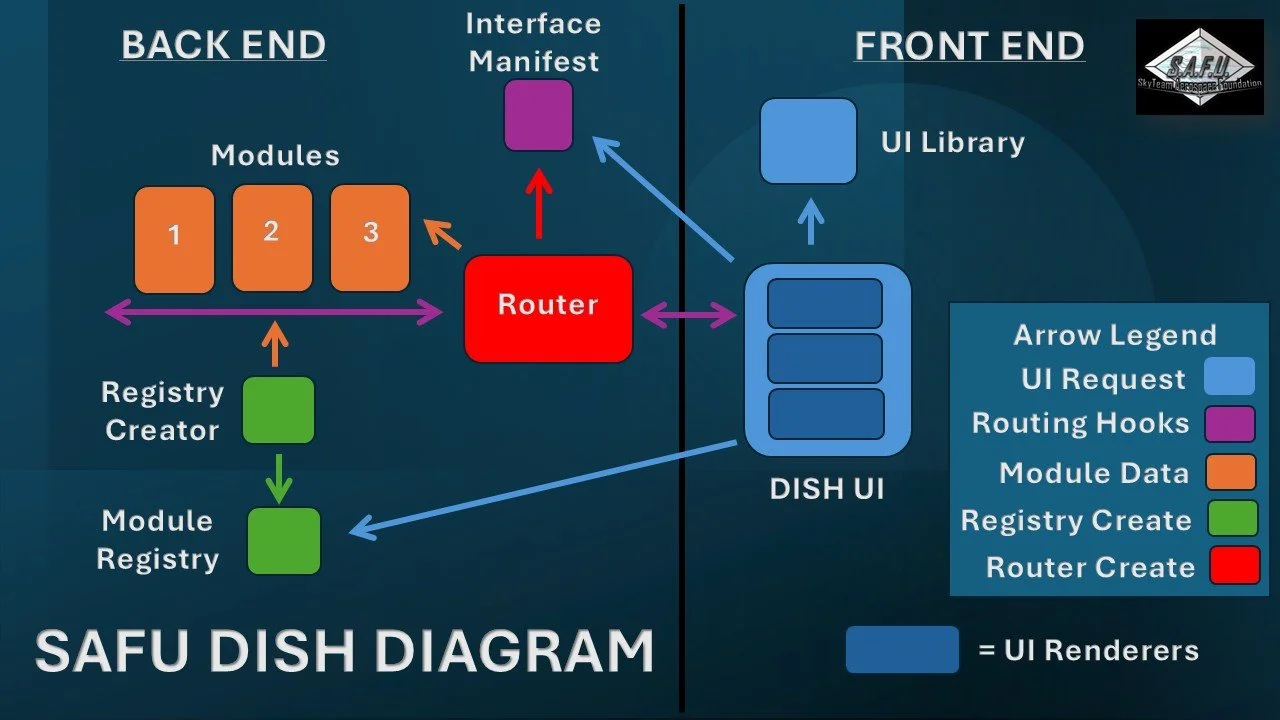
main.py – System initialization and boot sequence.
diagnostics.py – Event logging, error detection, and system-wide trace functions.
router.py – Communication layer that maps backend module functions to frontend interface components.
registery.py – Module registration system responsible for scanning, validating, and mapping Architecture Package Modules (APMs).
This minimal design ensures that all backend behavior is predictable, observable, and easy to maintain.
Architecture Package Modules (APMs)
APMs are self-contained modules that define discrete system capabilities. Each APM includes:
A dedicated functions.py file for callable operations.
Metadata for registration and interface mapping.
A standardized directory structure for consistent integration.
APMs allow developers to extend DISH without modifying core code, supporting hot-swappable functionality and modular scaling.
Router System
The router links backend logic to frontend rendering by:
Reading the interface manifest generated by the frontend.
Scanning each APM for available functions.
Generating a real-time command map used to bind UI components to backend operations.
This enables dynamic interface construction without hardcoded routing or manual UI wiring.
Frontend Architecture
The frontend is built with Svelte for responsiveness and low overhead. Its primary function is to render the user interface based on the router’s command map. Core components include:
Application container
Sidebar navigation
Main panel renderer
Diagnostics panel renderer
UI element library
The frontend dynamically assembles itself according to available APM functions, allowing rapid iteration and modular UI expansion.
System Summary
DISH provides a structured, modular environment for intelligence systems by combining:
A minimal, well-defined backend
A dynamic routing layer
A modular APM system
A responsive frontend renderer
The result is a clean, scalable framework that supports advanced intelligent subsystems while ensuring stability, transparency, and long-term maintainability.
Download DISH Here
Demo - 1
Demo - 2
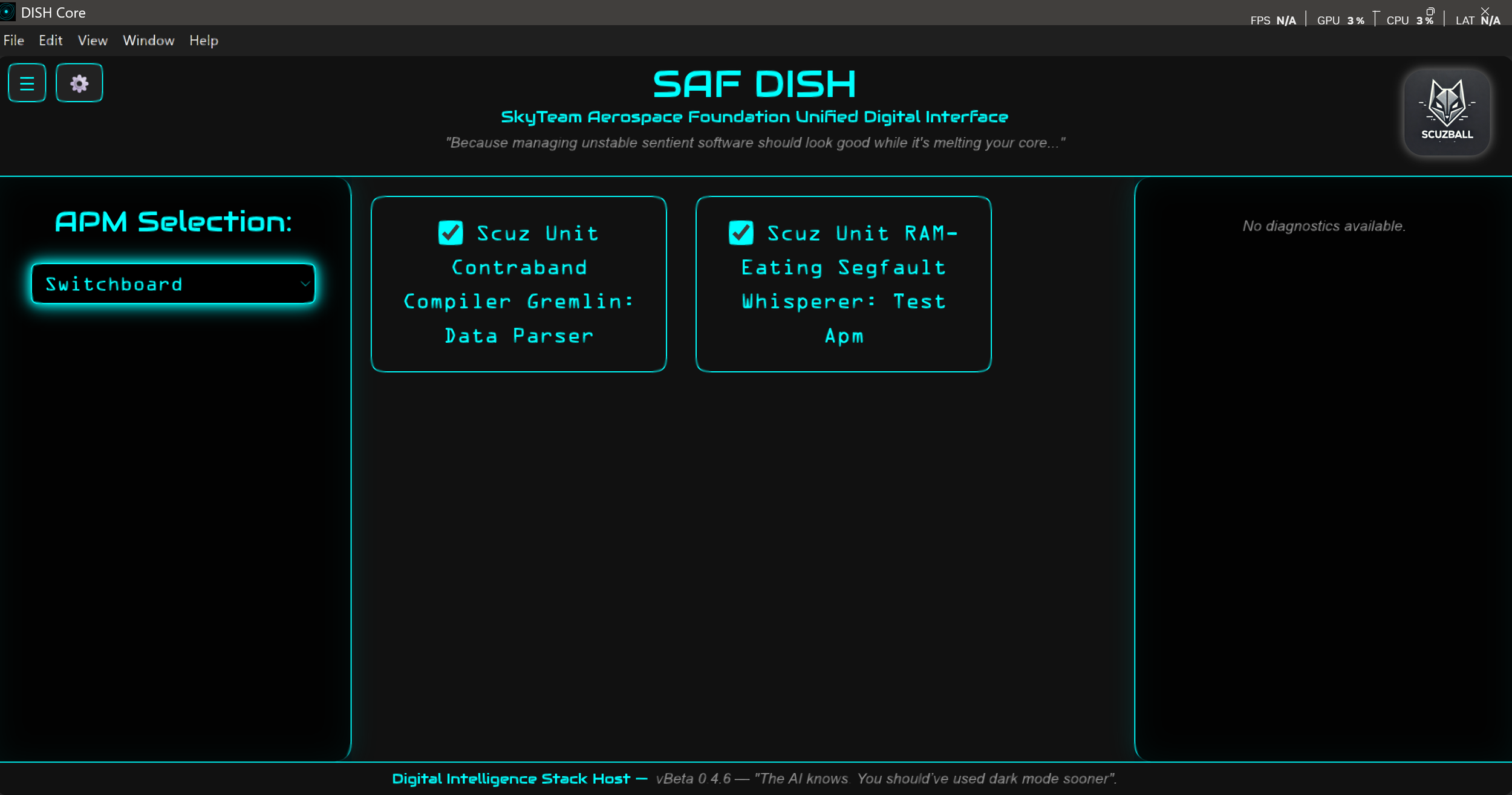
Main APM Switch Panel
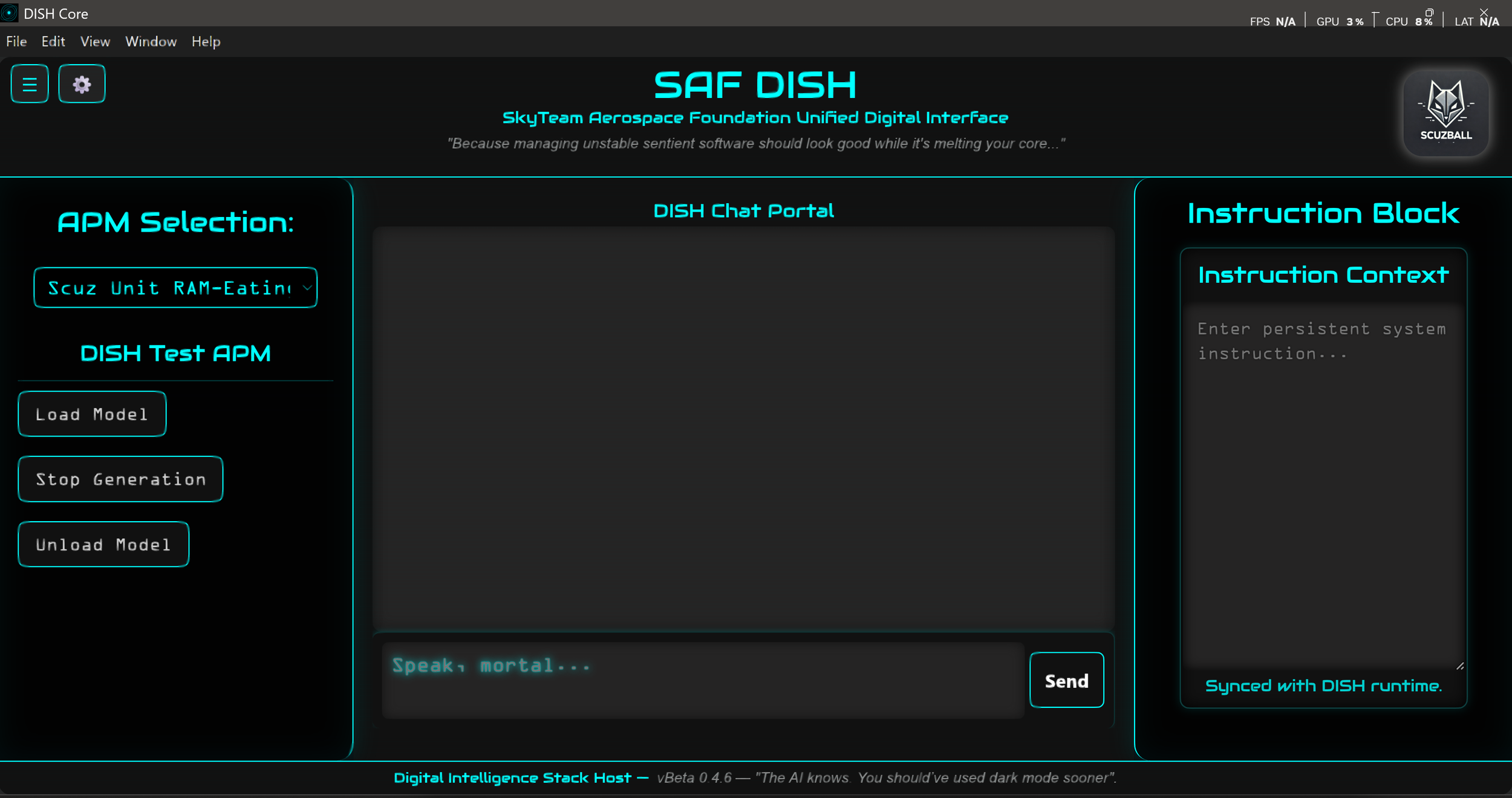
Test APM Chat Window
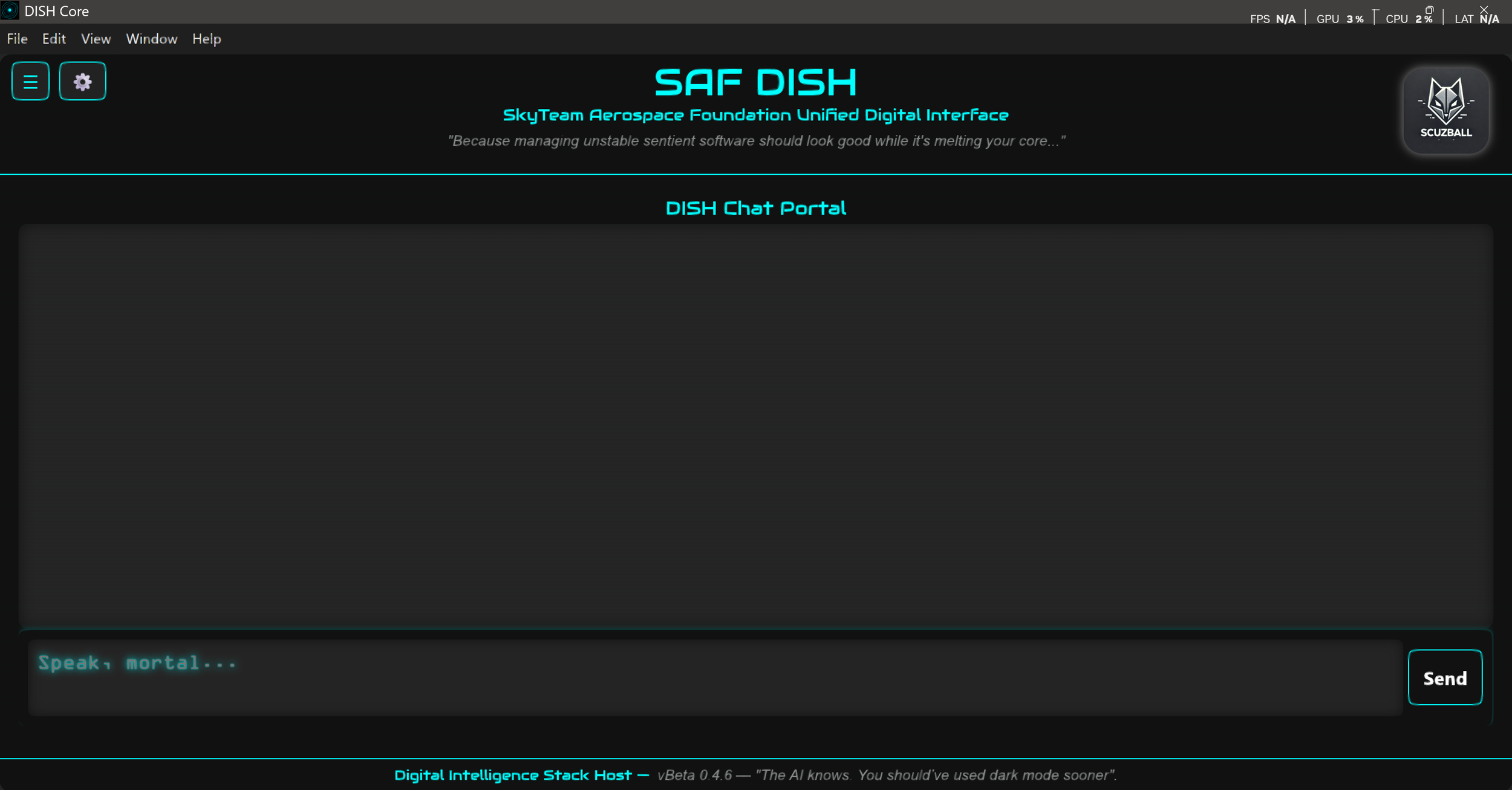
Sidebars Collapsed
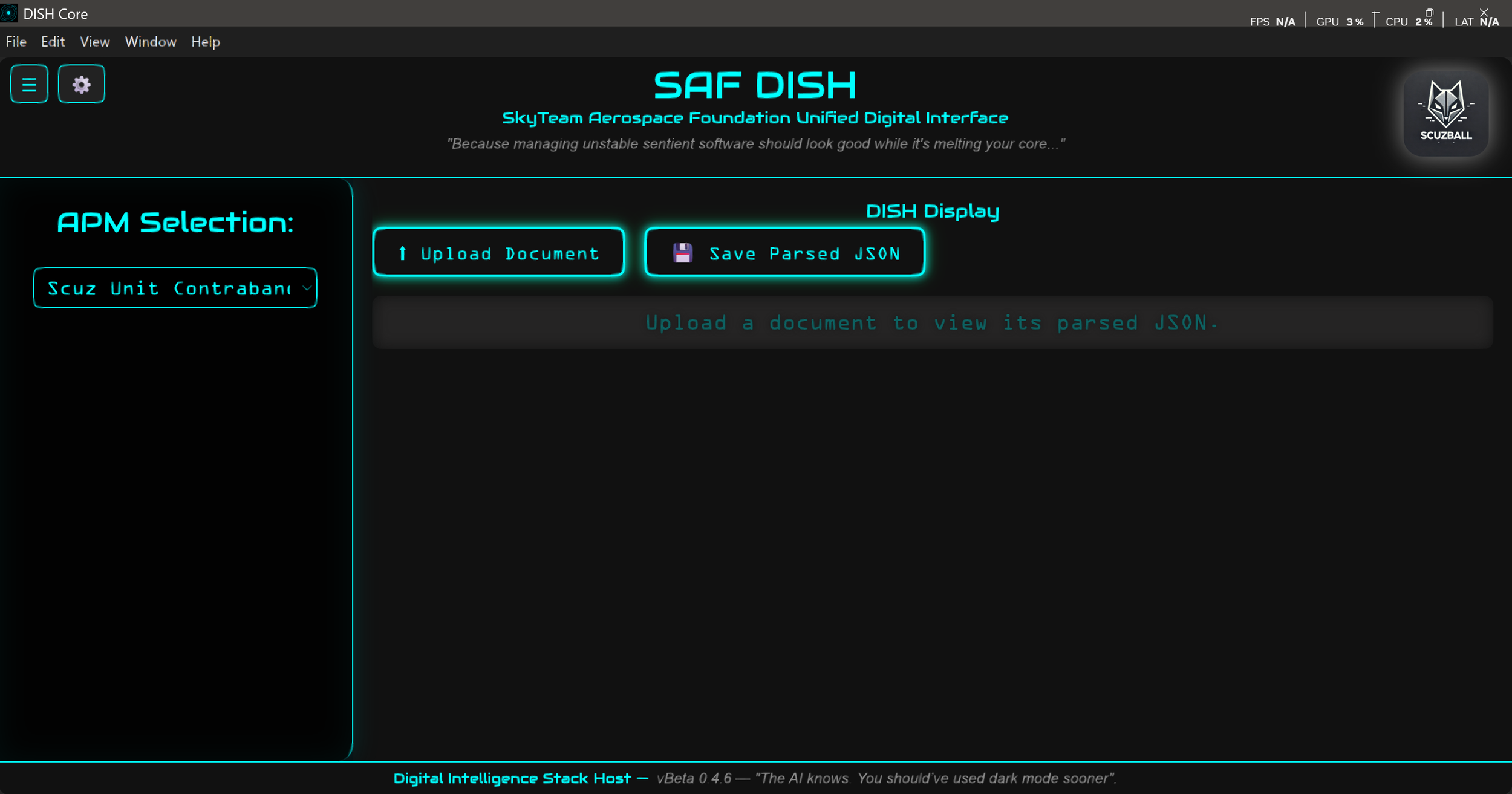
Doc to JSON Data Parser
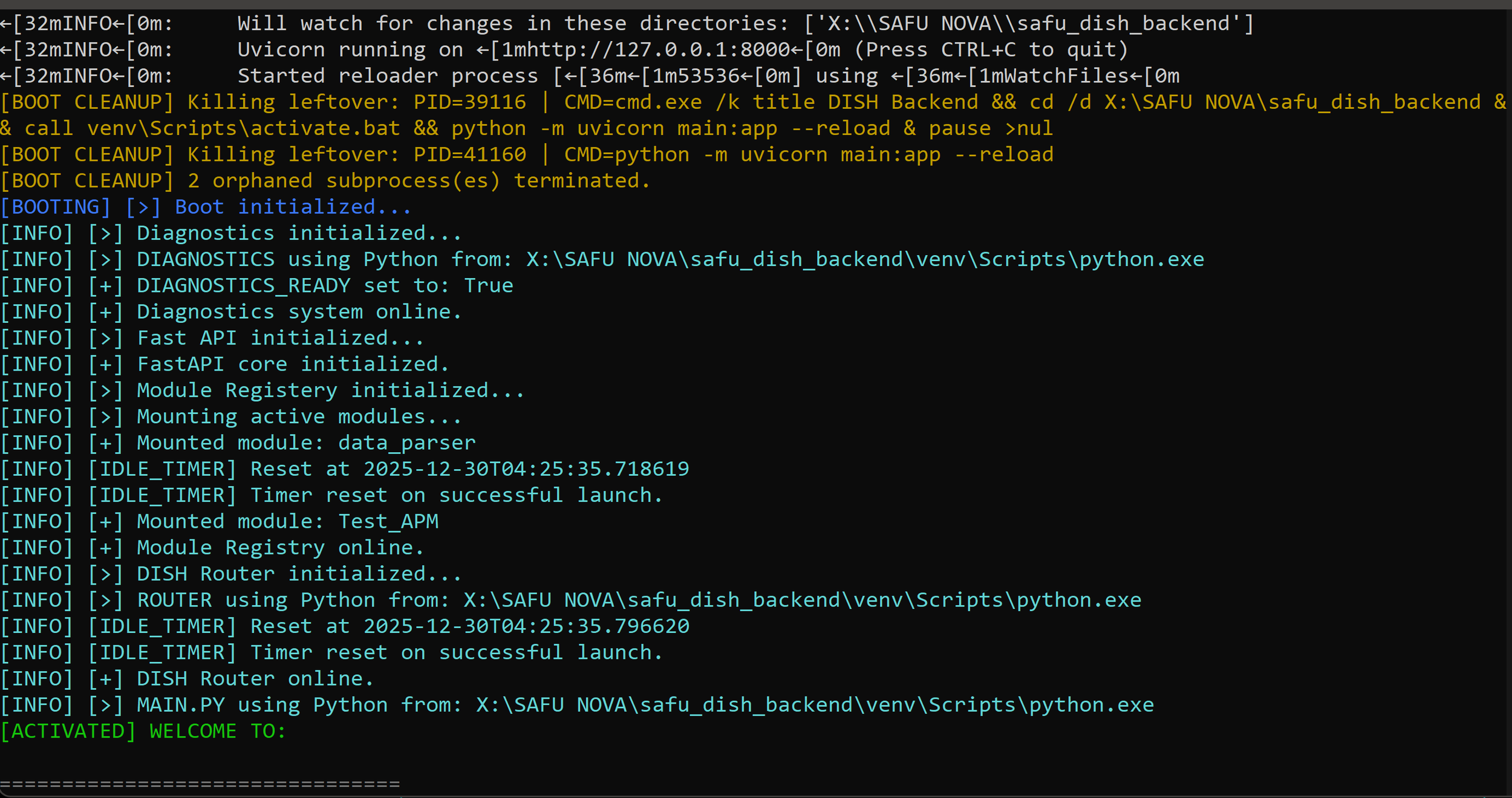
Backend Console Logs
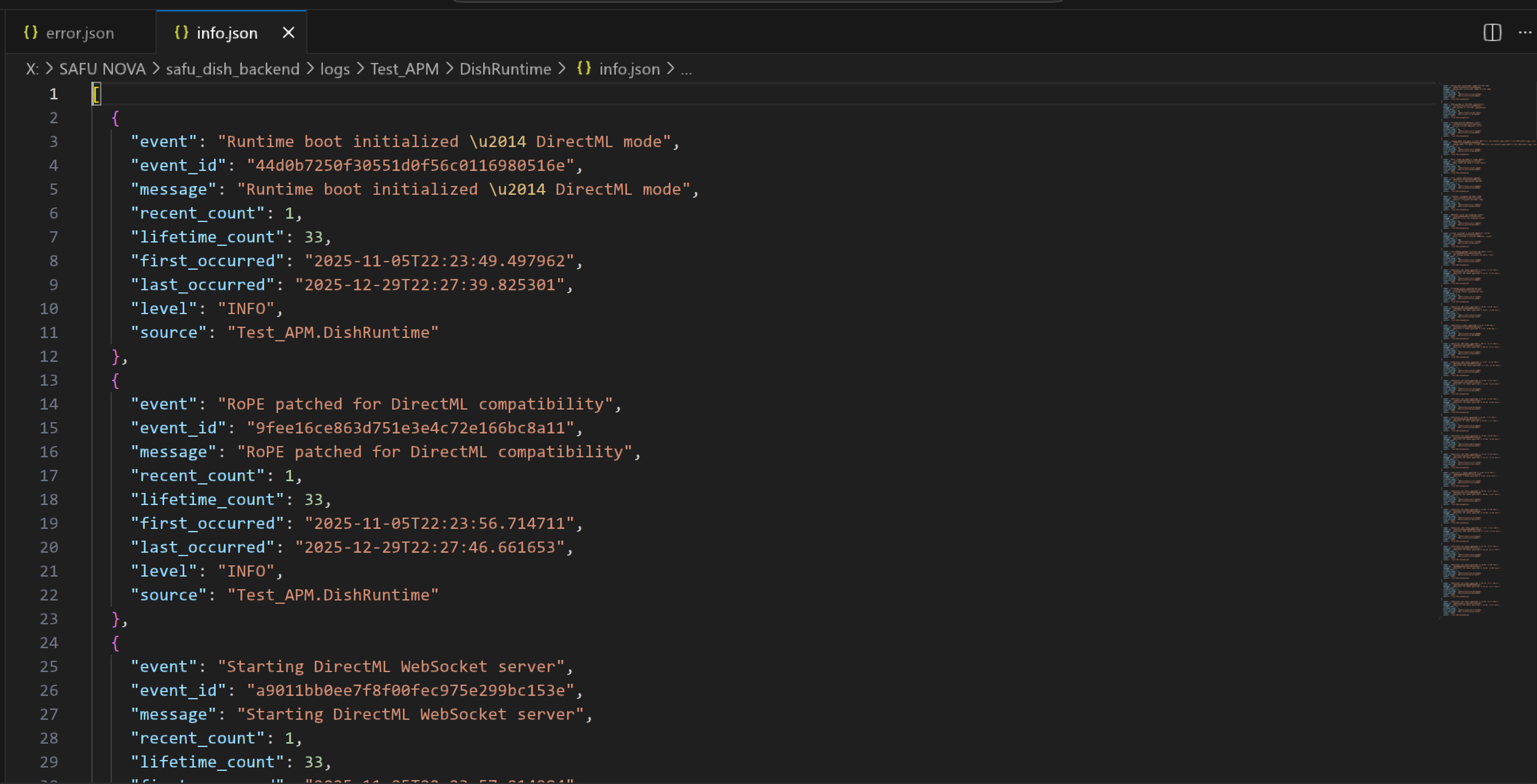
Internal System Logs
Now available for download
For further information on DISH, please visit the SAF Framework Codex Volume 1 section.
This covers the construction, the concepts, and internal design choices on how DISH was built.
Volume 1 of the SAF Framework Codex is also the user manual for DISH operations.
Keep an eye out on Github for further updates